

Internal Bleaching Root Canal Tooth Case
Internal Bleaching Root Canal Tooth Case
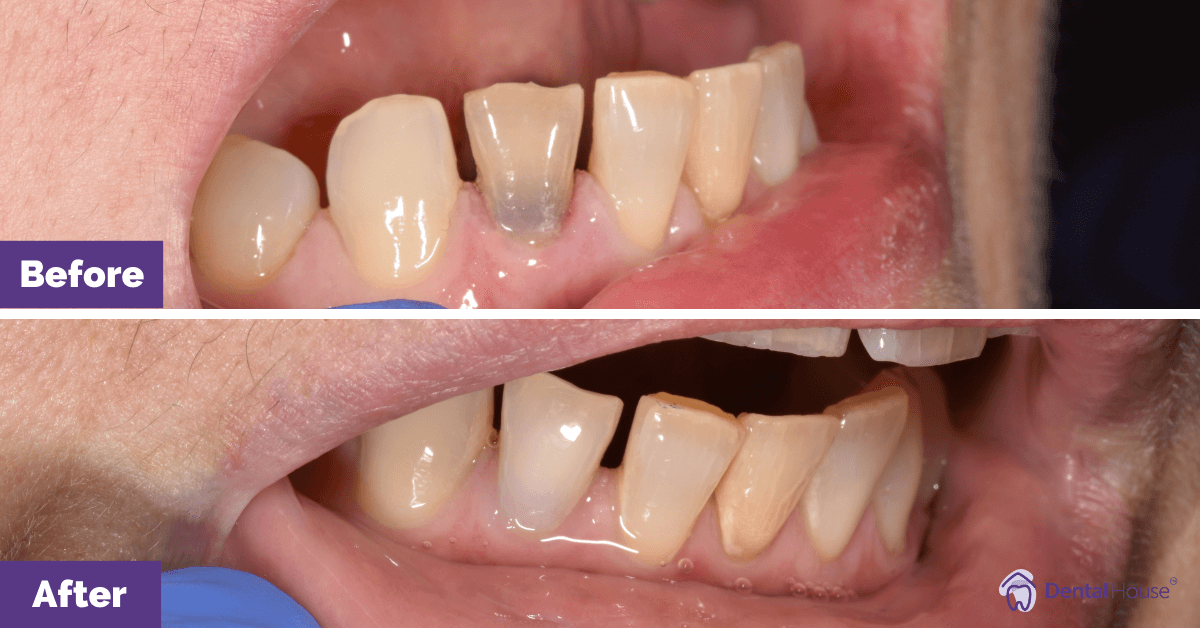
How Effective is Internal Bleaching for Discoloured Root Canal Treated Teeth?
Case Note ID: Dec-2024-IB
Location: New Gisborne Dental House (serving the Gisborne, Macedon Ranges and surrounding areas)
Primary Treatments: Internal bleaching (walking bleach technique)
Supporting Technology: Professional bleaching agents, existing root canal treatment assessment
Presenting Clinical Problem
- Single anterior tooth discolouration following previous root canal treatment
- Progressive darkening of non-vital tooth over time
- Visible colour discrepancy compared to adjacent natural teeth
- Patient reported aesthetic concerns regarding tooth appearance
- Post-endodontic discolouration is a recognised clinical occurrence
- Primary objective: Improve tooth colour to achieve better aesthetic harmony
Treatment Plan & Clinical Process
Phase 1: Assessment and Treatment Planning
- Evaluation of existing root canal treatment adequacy
- Radiographic assessment of periapical health and seal integrity
- Assessment of tooth structure and suitability for internal bleaching
- Discussion of internal bleaching procedure, alternative options, and realistic expectations
- Shade assessment and documentation of baseline tooth colour
Phase 2: Internal Bleaching Procedure
- Access cavity preparation to expose root canal filling
- Placement of protective barrier over root canal filling
- Application of bleaching agent within pulp chamber
- Temporary seal placement
- Multiple appointments as required for desired colour change
Phase 3: Finalisation and Monitoring
- Removal of bleaching agent
- Permanent restoration of access cavity
- Post-treatment shade assessment
- Follow-up review appointments to monitor colour stability
Clinical Outcome
Internal bleaching was performed to address discolouration of a root canal-treated tooth. The procedure involved placing bleaching agent within the tooth structure over multiple appointments.
Individual responses to internal bleaching vary significantly. Treatment outcomes cannot be guaranteed, and not all discoloured teeth respond equally to bleaching procedures. Some teeth may require multiple treatment cycles or may not achieve desired colour match with adjacent teeth. Colour relapse can occur over time, potentially requiring repeat treatment or alternative restoration such as veneers or crowns.
Frequently Asked Questions for Gisborne and Macedon Ranges Patients
Why do teeth darken after root canal treatment?
Post-endodontic discolouration typically results from haemoglobin breakdown products, residual necrotic tissue, or certain endodontic materials being absorbed into the dentine structure. The degree of discolouration varies between individuals and cannot always be prevented, even with optimal endodontic technique. Blood in the pulp chamber during root canal treatment can also contribute to darkening.
How long does internal bleaching take?
Treatment duration varies based on individual response and degree of discolouration. Multiple appointments over several weeks are typically required. Some teeth respond within 2-3 treatment cycles, while others may require extended treatment or may not achieve desired results. Treatment is usually spaced 1-2 weeks apart to allow assessment of colour change progression.
What are alternatives to internal bleaching?
Alternatives include external bleaching (though often less effective on root-treated teeth), porcelain veneers, or full coverage crowns. Each option has specific indications, limitations, longevity considerations and cost implications. Not all teeth are suitable candidates for every treatment approach. The choice depends on extent of discolouration, tooth structure remaining, and individual aesthetic goals.

More Patient Journeys
SS’s Porcelain Veneers & Whitening in New Gisborne
Check out SS’s smile makeover journey in New Gisborne. SS came to our practice concerned because she wanted to improve and brighten her sm…
Rita’s Smile Makeover in Bacchus Marsh
We want to share Rita’s dental smile makeover journey with Composite Veneers in Bacchus Marsh. Rita had always wanted to improve her smile …
Sue’s Denture Journey in Melbourne
We want to share with you Sue’s denture journey in Melbourne. Sue is one of our lovely patients from Melbourne. Sue wanted to fix her teet…
Ian’s Smile Makeover in Gisborne
We want to share with you Ian’s smile makeover journey in Gisborne. Ian felt overly self-conscious every time he talked and smiled. He went …