
Is Happy Gas a Safe and Effective Sedation Option for Children and Adults?
Is Happy Gas a Safe and Effective Sedation Option for Children and Adults?
Dental anxiety affects people of all ages, from young children experiencing their first dental visit to adults who’ve developed fears over time. If you or your child feel anxious about dental treatment, you’ve probably wondered about sedation options that could make the experience more comfortable. Happy gas, or nitrous oxide, represents one of the most established forms of sedation dentistry available today.
According to the Australian Dental Association, dental anxiety affects approximately 15% of Australians, with many avoiding necessary treatment due to fear. Sedation dentistry offers various solutions to help anxious patients receive the care they need, with nitrous oxide being among the most widely used and researched options for both children and adults.
What Is Happy Gas and How Does It Work?
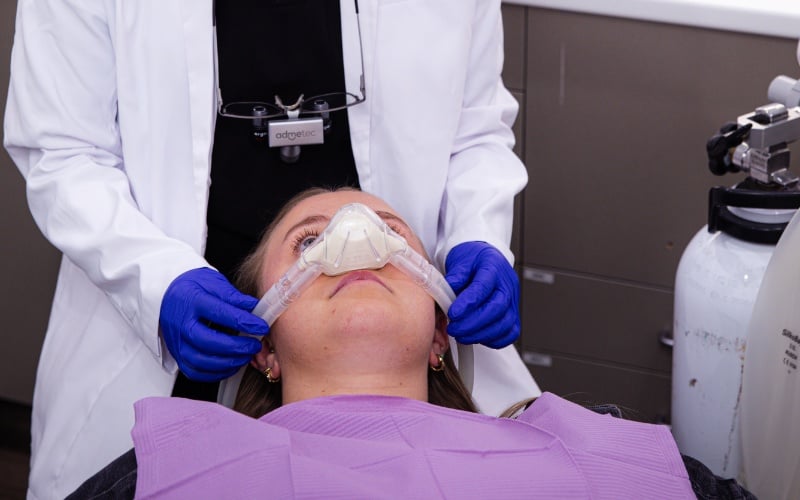
Happy gas, scientifically known as nitrous oxide, is a colourless, odourless gas that has been used in sedation dentistry for over 150 years. The gas is mixed with oxygen and delivered through a comfortable nasal mask, allowing patients to breathe normally while experiencing a calming effect.
The name “happy gas” comes from the pleasant, relaxed feeling many patients experience during treatment. Nitrous oxide works by affecting the central nervous system, reducing anxiety and discomfort while allowing patients to remain conscious and responsive throughout their dental procedure.
Key characteristics include:
- Rapid onset and recovery within minutes of administration
- Adjustable levels to meet individual patient needs
- Maintained consciousness allowing normal communication
- Quick elimination from the body once the mask is removed
The gas doesn’t accumulate in body tissues and is eliminated through normal breathing, making it a predictable option for sedation dentistry.
Safety Profile for Different Age Groups
Nitrous oxide has an established safety record spanning decades of use in dental and medical settings. The gas has been extensively studied in both paediatric and adult populations, with research consistently demonstrating its safety when properly administered.
For children, nitrous oxide sedation offers particular advantages in sedation dentistry:
- Non-invasive delivery through a comfortable nasal mask
- Rapid adjustment if the child becomes uncomfortable
- Maintained protective reflexes throughout treatment
- Quick recovery allowing normal activities shortly after treatment
Adult patients also benefit from the predictable effects of nitrous oxide. The sedation can be particularly helpful for patients with mild to moderate dental anxiety, those requiring longer procedures, individuals with sensitive gag reflexes, or anyone seeking relaxation during routine treatments.
According to Australian medical literature, serious adverse events with nitrous oxide are extremely rare when proper protocols are followed.
Effectiveness for Managing Dental Anxiety
Research consistently demonstrates nitrous oxide’s effectiveness in reducing dental anxiety and improving patient comfort. Studies show that most patients report significantly reduced anxiety levels and increased willingness to complete necessary dental treatment.
The effectiveness of nitrous oxide in sedation dentistry stems from several factors:
Psychological comfort: The pleasant, relaxed feeling helps patients feel more at ease in the dental environment.
Reduced pain perception: While not a pain reliever itself, nitrous oxide can reduce the perception of discomfort during procedures.
Time distortion: Many patients report that procedures seem to pass more quickly under nitrous oxide sedation.
Maintained cooperation: Unlike deeper sedation methods, patients remain responsive and can follow instructions throughout treatment.
Australian dental research indicates that nitrous oxide successfully reduces anxiety in approximately 80-90% of patients who receive it.
Administration Process and Patient Experience
The process of receiving nitrous oxide sedation is straightforward and comfortable. The typical administration involves:
Pre-treatment assessment: Your dentist reviews your medical history and explains the sedation process.
Comfortable positioning: You’re seated comfortably with the nasal mask positioned gently over your nose.
Gradual introduction: The nitrous oxide is introduced slowly, allowing you to adjust to the sensation.
Monitoring throughout: Your dental team monitors your comfort level and can adjust the gas concentration as needed.
Recovery: Pure oxygen is administered for several minutes before the mask is removed, ensuring complete recovery.
Most patients describe the experience as pleasant and relaxing. Some report feeling lightheaded or experiencing a tingling sensation, while others simply feel calm and comfortable throughout their treatment.
Comparing Sedation Options
Sedation dentistry offers several options beyond nitrous oxide, each with distinct characteristics. Understanding these differences helps patients make informed decisions about their care.
Nitrous oxide advantages:
- Rapid onset and recovery
- Adjustable during treatment
- Maintained consciousness and reflexes
- Minimal side effects
- Suitable for most ages
Other sedation options like oral or IV sedation may offer deeper relaxation but require longer recovery times and additional monitoring.
The choice between sedation options depends on factors including anxiety level, procedure complexity, medical history, and personal preferences.
Considerations and Contraindications
While nitrous oxide is considered safe for most patients, certain conditions may affect its suitability. Your dental team will review your medical history to ensure nitrous oxide sedation is appropriate.
Conditions that may affect nitrous oxide use include:
- Severe respiratory conditions that affect breathing
- Recent eye surgery involving gas bubble placement
- Pregnancy (particularly first trimester)
- Severe anxiety requiring deeper sedation methods
- Inability to breathe through the nose
Most medications don’t interact with nitrous oxide, making it suitable for patients taking various prescriptions. The gas is eliminated quickly from the body, typically allowing patients to drive and resume normal activities shortly after treatment.
Planning Your Comfortable Dental Experience
Nitrous oxide has proven itself as a safe and effective option in sedation dentistry for both children and anxious adults. Its excellent safety profile, rapid onset and recovery, and adjustable nature make it an attractive choice for managing dental anxiety while maintaining patient safety.
The decision to use sedation should be made collaboratively between you and your dental team, considering your individual needs and circumstances. With proper administration and monitoring, nitrous oxide can transform dental visits from anxiety-provoking experiences into comfortable, manageable appointments.
Ready to explore how sedation dentistry could make your dental visits more comfortable? Contact New Gisborne Dental House to discuss your options. Our experienced team serves patients throughout New Gisborne, Macedon, and Riddells Creek, providing gentle care with various sedation options to ensure your comfort.
Call our practice or complete our enquiry form to learn how we can help you or your child feel more relaxed during dental treatment.
Frequently Asked Questions
How quickly does happy gas take effect and wear off?
Nitrous oxide typically takes effect within 2-3 minutes of administration and wears off completely within 3-5 minutes after the mask is removed. This rapid onset and recovery make it convenient for dental appointments.
Can children safely receive happy gas sedation?
Nitrous oxide is considered safe for children when properly administered by trained dental professionals. It’s often preferred for paediatric patients because it’s non-invasive, adjustable, and allows quick recovery.
Will I remember my dental treatment while under happy gas?
Most patients remain conscious and aware during nitrous oxide sedation, though many report feeling very relaxed and some may have hazy memories of the procedure. You’ll be able to respond to your dentist’s instructions throughout treatment.
DISCLAIMER:
The content has been made available for informational and educational purposes only. New Gisborne Dental House does not make any representation or warranties with respect to the accuracy, applicability, fitness, or completeness of the content.
The content is not intended to be a substitute for professional personal diagnosis or treatment. Always seek the advice of your dentist or another qualified health provider with any questions you may have regarding a dental or medical condition. Never disregard professional advice or delay seeking it because of something you have read or seen on the Site.
Services we mentioned:
Related Articles
Need a Cosmetic Dentist Open on Weekends Near New Gisborne?
Looking for a cosmetic dentist open on weekends near New Gisborne? Saturday appointments available by arrangement. Complimentary first consultation. Call (03) 5414 2844.
Cosmetic Dental Care in the Macedon Ranges: What’s Available Locally
Looking for a cosmetic dental clinic in the Macedon Ranges? Comprehensive services at New Gisborne Dental House. Complimentary first consultation. Call (03) 5414 2844.
Waking Up After Dental Surgery: Your GA Recovery Timeline
Learn what to expect during post-GA dental recovery. Complete guide to recovering after general anaesthesia for dental procedures in Victoria.

Soft Toothbrushes, Gentle Dentists: Reducing Dental Anxiety
Some folks say there is too much softness in the world today. That kids get it too easy. However, when it comes to going to the dentist, I bet, there is less complaint about the soft treatment. Soft toothbrushes and gentle dentists are the catch-cries for reducing...